


Highway Maintenance Management: Kilometer-Based Asset Tracking and Cost Analysis With SAP PM
Maintenance cost tracking and work order management for highway electromechanical systems, toll booths and infrastructure with SAP PM — broken down by kilometer, direction and lane.
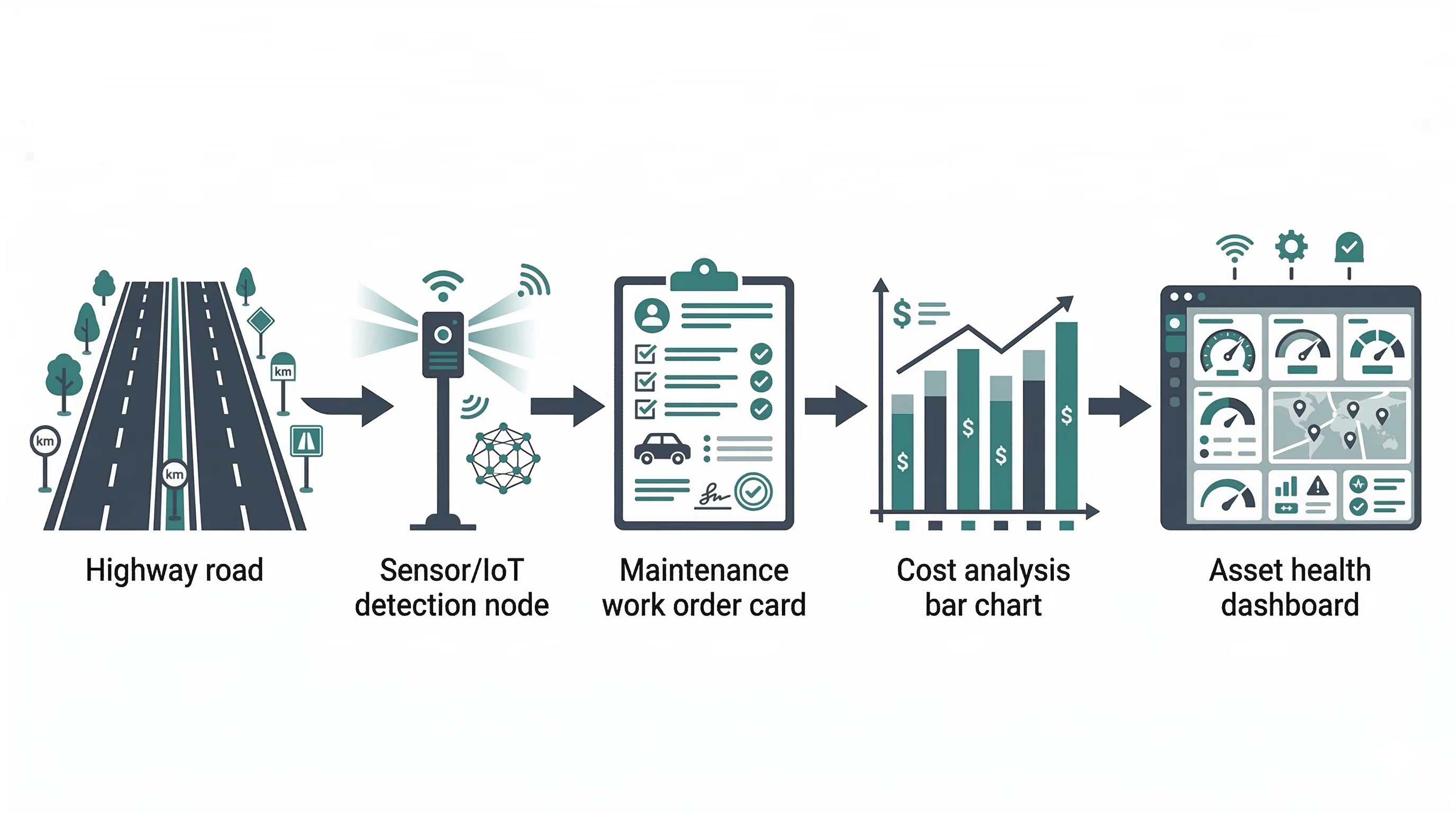
Highway Maintenance Management: Kilometer-Based Asset Tracking and Cost Analysis With SAP PM
In highway operations, an area as critical as revenue management is the accurate tracking of infrastructure and superstructure maintenance costs. On a highway hundreds of kilometers long, thousands of assets — toll booths, lighting systems, traffic control units, cameras, barriers and the road surface — can be managed professionally for maintenance and repair through the SAP Plant Maintenance (PM) module.
Highway Asset Hierarchy
In SAP PM, highway assets are structured in a geographic and functional hierarchy:
Location-Based Breakdown
- Highway segment (e.g. Istanbul-Ankara Highway)
- Kilometer range (e.g. KM 45-50)
- Direction (Outbound / Inbound)
- Lane (Lane 1, Lane 2, Hard shoulder)
Equipment-Based Breakdown
- Toll systems: HGS antennas, barrier motors, payment terminals
- Lighting: Road lighting poles, tunnel lighting
- Traffic control: Variable message signs (VMS), speed radars
- Security: CCTV cameras, SOS phone units
- Infrastructure: Bridges, viaducts, tunnel ventilation systems
Work Order Management
Every maintenance activity is executed through a Work Order. Work orders are classified as:
- Planned maintenance: Periodic checks, lubrication, calibration
- Breakdown maintenance: Repairs initiated by a fault notification
- Investment maintenance: Capacity expansion or modernization projects
Material, labor and external service costs are charged to each work order.
Kilometer-Based Cost Analysis
One of the critical KPIs in highway operations is maintenance cost per kilometer. With the integration of SAP PM and CO:
- The total maintenance cost of every kilometer segment is calculated
- The cost trend over years is analyzed
- High-cost segments are identified to support investment decisions
- Booth-level operating costs are compared with revenue to measure profitability
Anomaly Detection for Proactive Maintenance
Moving from traditional periodic maintenance to condition-based maintenance significantly reduces costs. By analyzing sensor data and historical breakdown records:
- Pre-failure warning systems are established
- Maintenance plans are dynamically optimized
- Spare part inventory levels are determined with forecast models
- End-of-life predictions are made for equipment
At VEX-I, we make the maintenance and repair costs of your highway infrastructure traceable through work orders in SAP PM — broken down by kilometer, direction and lane.
Share:
What Is SAP BRIM? The Future of Billing and Revenue Management