
SAP FI-CA (Contract Accounting): An End-to-End Guide to Contract-Based Accounting
SAP FI-CA is a powerful module designed to manage high-volume customer accounts and contract-based accounting. FI-CA setup, configuration and best practices.
SAP FI-CA (Contract Accounting): An End-to-End Guide to Contract-Based Accounting
The traditional SAP FI-AR (Accounts Receivable) module manages receivables successfully up to a certain scale. But for telecom operators, energy companies or digital subscription platforms with millions of customers, FI-AR's performance and flexibility limits become insufficient. SAP FI-CA (Contract Accounting) is the high-volume, contract-based accounting module built precisely for this need.
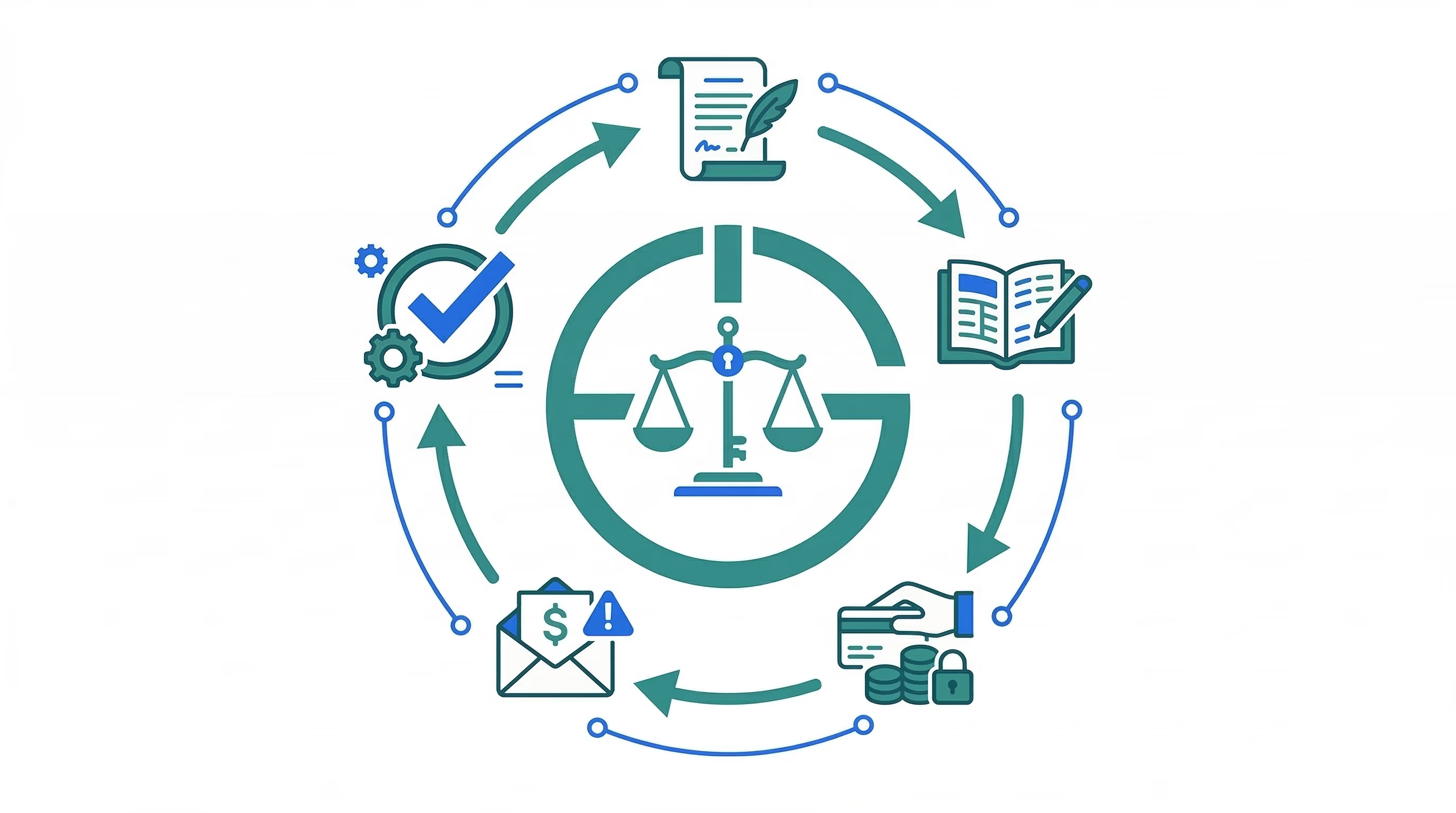
Core Capabilities of FI-CA
Contract Account Management
In FI-CA, every customer is represented by a Business Partner with one or more associated Contract Accounts. This structure makes it possible to manage multiple contracts of a customer — with different payment terms and separate balances — under a single umbrella.
High-Volume Transaction Performance
FI-CA can handle millions of daily invoice and payment transactions seamlessly with parallel processing. Mass invoice creation, mass payment allocation and mass dunning runs all execute without performance loss.
Payment and Collection Management
Automatic payment matching, partial payments, overpayments and refund processes are managed by FI-CA's strong collections engine. Different payment methods (bank transfer, credit card, direct debit) can be integrated.
Dunning Processes
Automatic dunning levels can be defined for overdue receivables. Each level can apply different late-interest calculations and communication templates. Different dunning strategies can be set for different customer segments.
Critical Points in FI-CA Configuration
Master Data Structure
Defining business partner roles, contract account categories and document types correctly is the foundation of the project. If this structure is not modeled correctly upfront, severe data inconsistencies emerge later.
FI-GL Integration
FI-CA works integrated with the General Ledger. Mapping receivables, revenue and tax accounts correctly is critical for financial reporting consistency. Reconciliation accounts and transfer posting configurations must be designed carefully.
Authorization Concept
In FI-CA, authorizations can be managed at a granular contract account level. Detailed authorization controls — which user can access which customer segment, who can issue refunds, etc. — must be defined.
FI-CA vs FI-AR: When to Use Which?
| Criterion | FI-AR | FI-CA | |-----------|-------|-------| | Customer count | Thousands | Millions | | Invoice volume | Medium | Very high | | Contract management | Limited | Comprehensive | | Subscription support | None | Full | | Performance | Standard | Optimized for high volume |
If your business runs on subscriptions or generates high invoice volumes, FI-CA is the right choice. As VEX-I, we are with you through every step — from FI-CA setup to go-live.
Share:
Highway Maintenance Management: Kilometer-Based Asset Tracking and Cost Analysis With SAP PM