


Enterprise Mobile App Strategies: A Mobile-First Approach to Digital Transformation
Enterprise mobile apps play a key role in business digital transformation. Gain competitive advantage with the right strategy and technology choice.
Enterprise Mobile App Strategies: A Mobile-First Approach to Digital Transformation
In the modern business world, mobile technologies are no longer just a means of communication — they have become a strategic force at the very center of business processes. Enterprise mobile apps offer concrete value across a wide spectrum, from increasing employee productivity to maximizing customer satisfaction.
The Strategic Importance of Enterprise Mobile Apps
Enterprise mobile apps deliver advantages in two main areas: accelerating business processes and enriching customer experience. From a process perspective, mobile apps allow employees to access critical information anytime, anywhere; mobile approval mechanisms speed up decision-making; and automatic data capture significantly reduces manual work. This also directly improves employee satisfaction by enabling flexible work. On the customer side, mobile channels offer 24/7 uninterrupted service, personalized interfaces that improve user experience and instant notifications for fast communication.
Mobile-First Enterprise App Categories
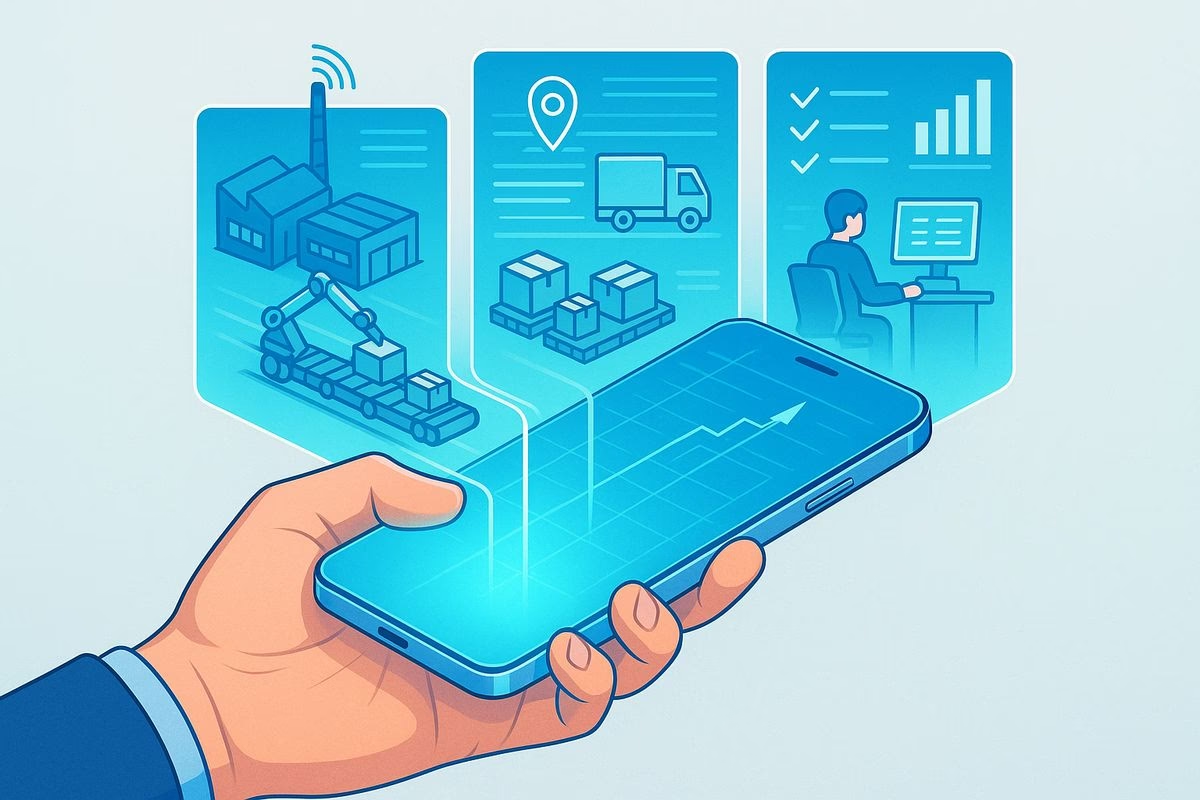
Enterprise mobile apps can be examined in three main categories based on their focus area. Internal operation apps target employee productivity directly with tools like field service management, real-time inventory tracking and project management. Customer-facing apps strengthen relationships with external stakeholders through B2B and B2C mobile sales platforms, customer portals and loyalty programs. Analytics and reporting apps support data-driven decision-making by giving managers real-time dashboards, financial reports and market analyses.
Strategic Decisions in Technology Selection
One of the most critical decisions in building an enterprise mobile app is the technology foundation. The choice usually comes down to Native vs Cross-Platform. Native apps are developed specifically for iOS or Android, deliver top-tier performance and provide full access to platform hardware features. The trade-off: separate development and maintenance for each platform. Cross-platform solutions use frameworks such as React Native or Flutter to build for both iOS and Android from a single codebase. This accelerates development and reduces costs. The technology choice must be made carefully based on budget, timeline and performance expectations.
The Enterprise Mobile App Development Process
A successful mobile app project follows a well-structured development process. The Strategy and Discovery Phase is the foundational step where business goals are defined, the target audience is analyzed and technical requirements are clarified. The UX/UI Design Process focuses on building a user-centric, intuitive interface through user journey maps and prototypes. The Development and Testing Phase progresses through agile methodologies, with automated tests guaranteeing the quality, performance and security of the app.
Security, Performance and Scalability
Security is one of the top priorities in enterprise mobile apps. End-to-end encryption of data communication, biometric and multi-factor authentication, and Mobile Device Management (MDM) integrations are core measures for protecting enterprise data. Performance directly impacts user experience — fast launch, optimized network and battery use are critical. Scalability must be planned with mechanisms such as server-side load balancing and auto-scaling so the app can serve increasing user loads without disruption.
Measuring Success: KPIs and ROI
The success of a mobile app must be measured with concrete metrics. Key performance indicators include daily and monthly active users, crash rates and user satisfaction scores. Return on investment is calculated through financial indicators such as cost savings from reduced manual operations, productivity gains and revenue growth from new sales channels.
Future Trends: AI and IoT
Mobile app technologies keep evolving. In the future, AI integration will deliver more personalized experiences with chatbots and voice assistants. IoT integrations will let mobile apps collect real-time data from sensors, control smart devices remotely and provide location-based services — creating new opportunities in areas such as Industry 4.0.
Conclusion
Enterprise mobile apps are an indispensable part of digital transformation strategies. With the right planning, technology choice and execution strategy, businesses can accelerate their processes, increase productivity, enrich customer experience and gain meaningful competitive advantage.
At VEX-I Technology we develop enterprise mobile app strategies tailored to your goals and needs. With our expertise in native and cross-platform technologies, we partner with you on your mobile transformation journey.
Share:
Enterprise Data Security 2025: A Strategic Defense Shield Against Cyber Threats