
SAP Convergent Invoicing (CI): Consolidate Charges From Different Sources Into One Invoice
SAP Convergent Invoicing combines billable items from multiple sources into a single consolidated invoice. The CI architecture, billable item management and invoicing process explained.
SAP Convergent Invoicing (CI): Consolidate Charges From Different Sources Into One Invoice
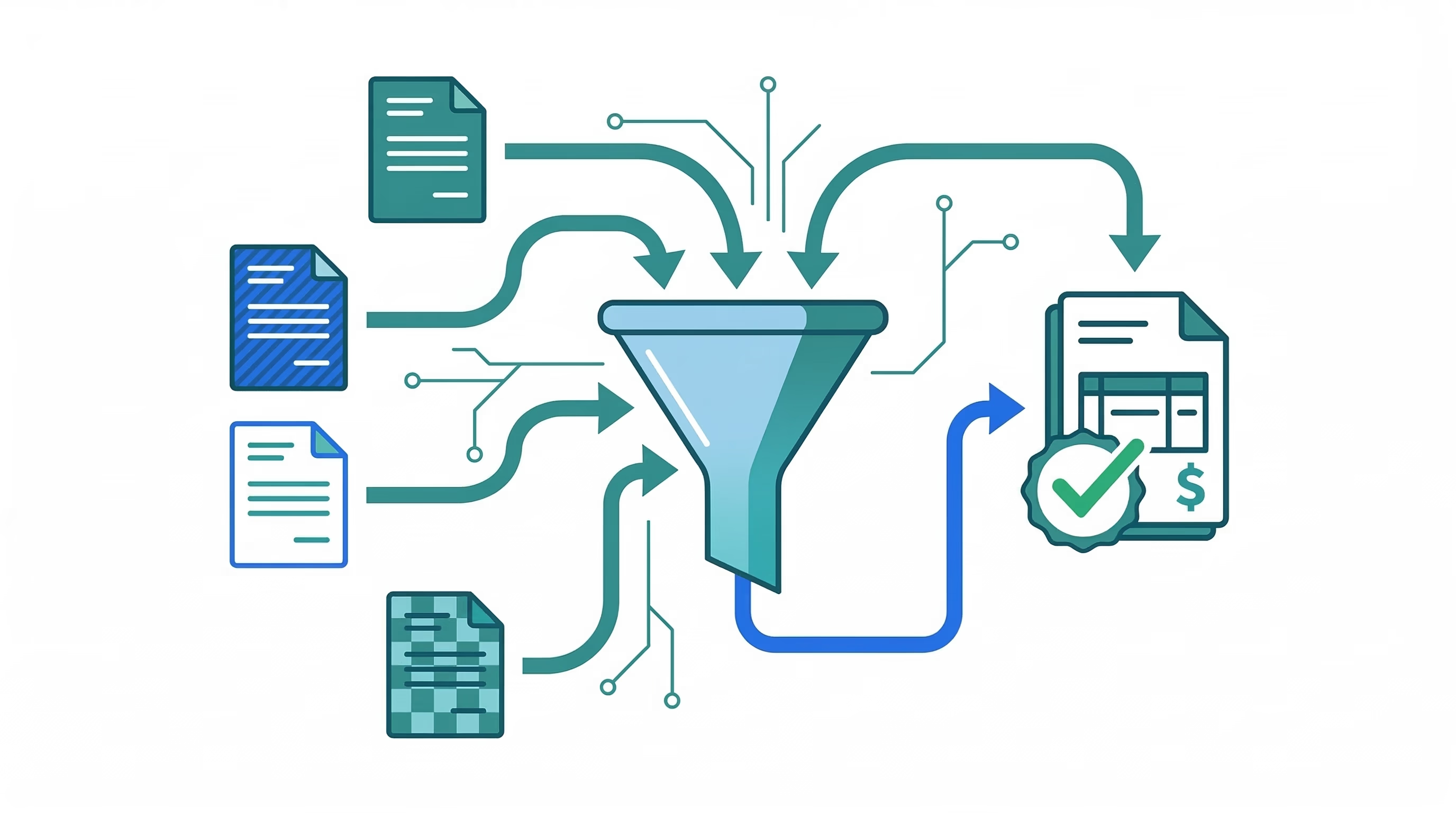
In modern enterprises, billing rarely comes from a single source. A single customer may be billed simultaneously for a fixed subscription fee, usage-based charges, additional service fees and one-off setup charges. Combining these line items — coming from different systems — into a single consistent invoice becomes possible with SAP Convergent Invoicing (CI).
How CI Works
Billable Items
The fundamental data unit in CI is the Billable Item. Usage charges from Convergent Charging, order line items from SD, or charges from external systems — they all flow into CI as billable items. Every billable item carries customer, amount, tax, period and source information.
Invoicing Process
CI groups collected billable items according to defined rules and turns them into invoices. These rules cover:
- Invoicing cycle: Monthly, quarterly or custom periods
- Grouping rules: Which items end up on the same invoice
- Invoice format: Different invoice templates by customer segment
- Tax calculation: Different tax rates and exemptions per item
Invoice Simulation
You can simulate invoices before live invoice creation. This capability is critical, especially when launching new tariffs or campaigns, to verify invoice amounts in advance.
CI Integration Points
CI sits at the center of the BRIM ecosystem:
- Convergent Charging → CI: Usage-based charges flow as billable items
- SAP SD → CI: Traditional order-based items are integrated
- CI → FI-CA: Generated invoices are posted in FI-CA
- CI → Output Management: Invoice outputs (PDF, e-invoice, e-archive) are produced
Performance Optimization
CI performance is critical in high-volume environments. Millions of billable items must be turned into invoices in a short time. Parallel processing configuration, billable item partitioning and invoicing job scheduling must be tuned correctly.
Country-Specific Requirements
E-invoice and e-archive obligations (such as those in Türkiye managed by the GİB) require CI outputs to be compatible with the integrators of the relevant tax authority. Invoice data generated by CI typically needs to be transferred to integrator systems in the required format (e.g. UBL-TR for Türkiye).
At VEX-I, we provide end-to-end CI consulting — from Convergent Invoicing configuration to e-invoice integration.
Share:
Improving SAP Processes with AI